
 EN
EN
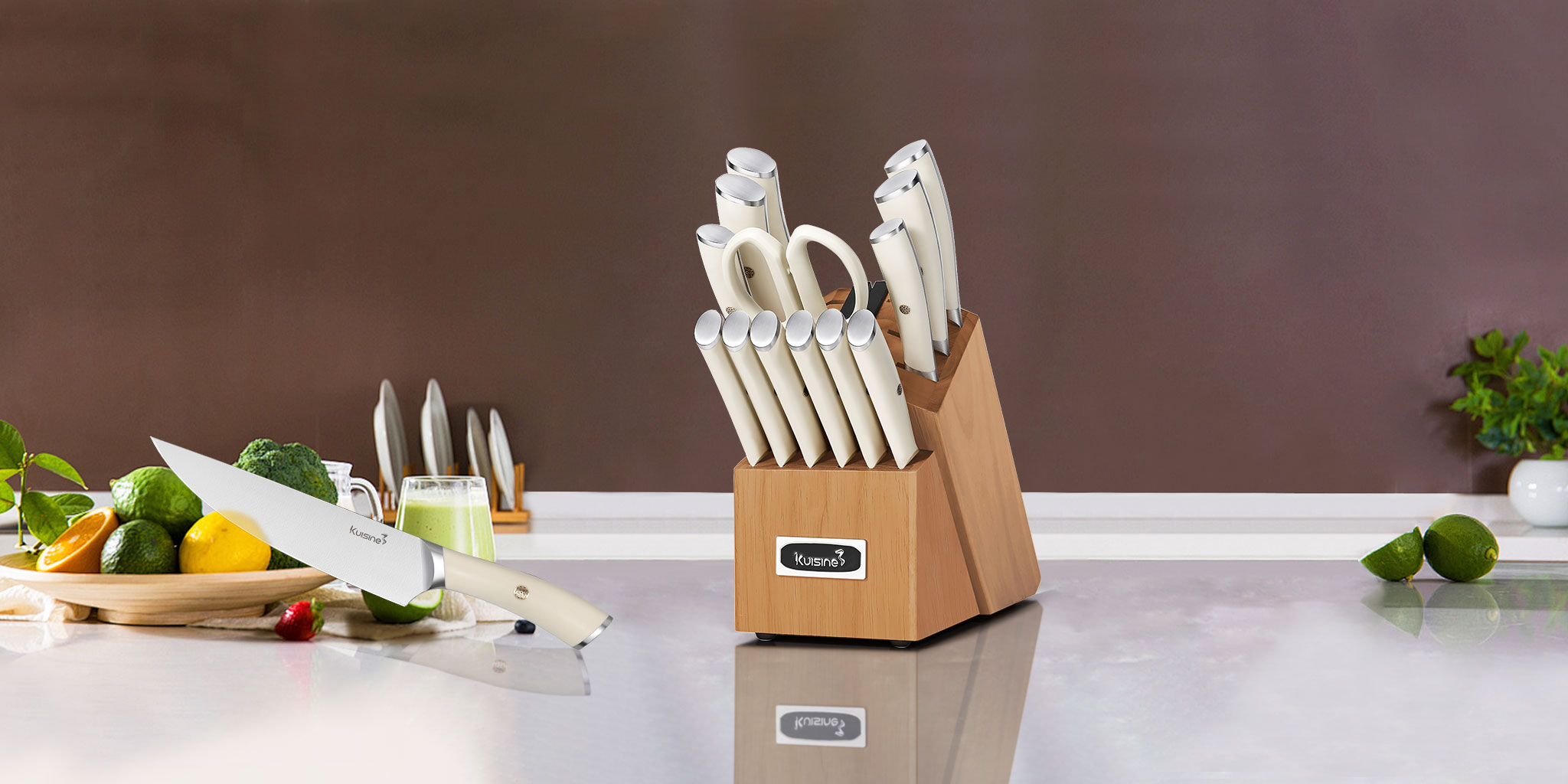
Master the Cut: Guide to Using Your Knife Set with Block Safely and Efficiently
Equipping a commercial kitchen or a modern residential culinary space involves many decisions, but few impact daily operations as much as selecting and maintaining primary cutting tools. A premium knife set with block serves as the literal backbone of food preparation, yet its potential is often underutilized due to improper handling, poor maintenance habits, and a general lack of understanding regarding tool safety. For culinary contractors, developers, and hospitality distributors, understanding how to maximize the efficiency of these culinary assets is crucial for ensuring operational longevity and safety.
Investing in top-tier kitchen hardware is only the first step. True efficiency comes down to a blend of advanced manufacturing techniques and user behavior. When professional spaces integrate high-quality cutlery, they expect tools that maintain structural integrity under heavy, continuous use. Maximizing this asset requires strict adherence to safety protocols, correct cutting techniques, and an understanding of the engineering parameters that make a premium knife set with block stand out from generic market alternatives.
The Technical Edge: Engineering Behind the Edge
The performance of any cutlery tool relies heavily on its metallurgical composition and manufacturing precision. Professional culinary blades are engineered using high-carbon German stainless steel (X50CrMoV15), a specific alloy choice that optimizes the balance between edge retention, rust resistance, and ease of sharpening. This material is heat-treated to a Rockwell Hardness rating of 56-58 HRC. This specific hardness level ensures the steel is strong enough to resist rolling or chipping during dense vegetable preparation, yet pliable enough to be honed back to a razor-sharp state without specialized factory machinery.
Blade geometry further defines cutting efficiency. A premium knife set with block typically features blades ground to a precise 15-degree cutting angle on each side. Compared to traditional 20-degree angles, a 15-degree edge minimizes cutting resistance by over 23 percent, significantly reducing physical fatigue for chefs who spend hours at preparation stations. Additionally, the integration of a full-tang construction—where the blade steel extends continuously through the entire length of the handle—shifts the balance point toward the bolster. This architectural balance provides superior leverage and reduces wrist strain, optimizing ergonomics for high-volume commercial environments.
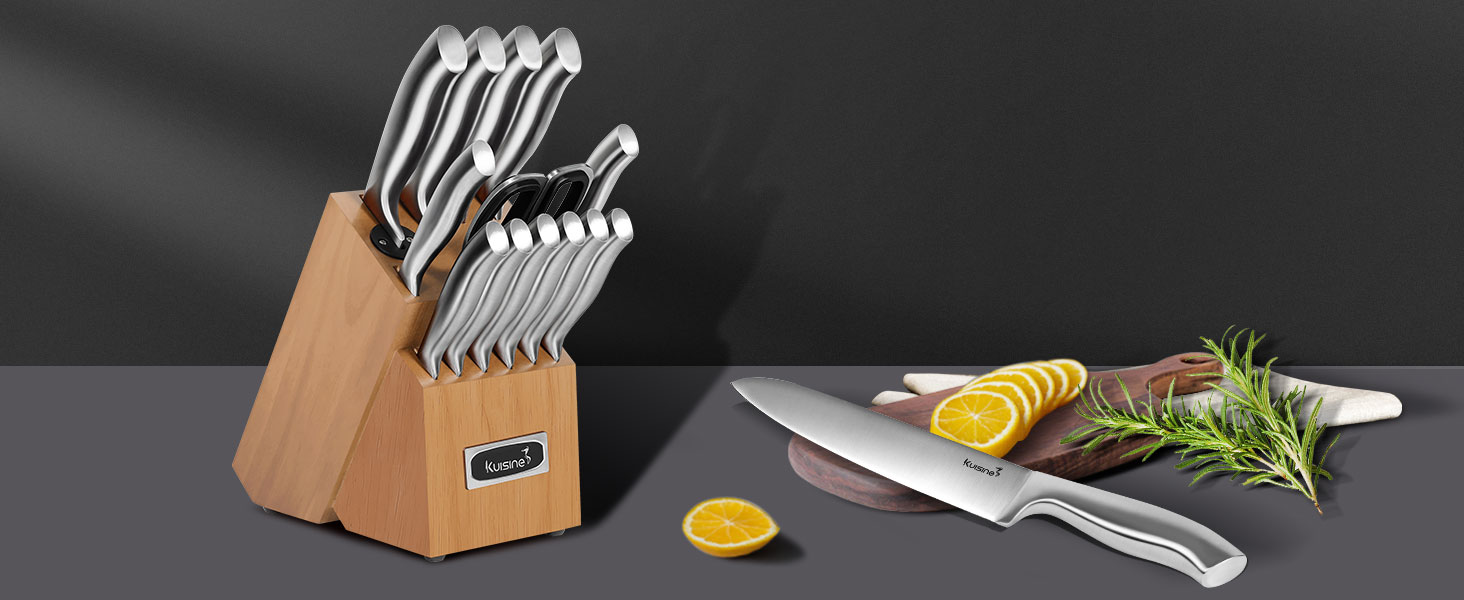
Maximize Storage and Organization with the Block
A counter block is not merely an aesthetic storage accessory; it is a critical safety device and an essential tool for preserving edge geometry. When blades are stored loosely in commercial drawers, they inevitably collide with other utensils, leading to micro-chipping along the cutting edge and accelerating dullness. A dedicated knife set with block eliminates this risk entirely by isolating each blade in its own designated slot, keeping sharp edges away from human contact and protecting the steel from physical impact.
Efficiency in a fast-paced environment depends heavily on workflow organization. A well-designed block positions tools at an optimal angle for rapid, intuitive retrieval, allowing kitchen staff to select the exact tool required without breaking their workflow. Proper insertion techniques are equally important for maintaining block longevity and hygiene. Users should always ensure blades are completely clean and dry before storage to prevent moisture accumulation within the slots. Additionally, when drawing or inserting a knife, pressing the spine of the blade against the wood rather than the cutting edge prevents unnecessary friction, preserving the sharp edge for longer periods between maintenance cycles.
Real-World Case Study: Transforming a High-Volume Culinary Space
To understand the practical impact of advanced cutlery engineering in a commercial setting, consider a recent high-end hospitality project in Munich, Germany. A major boutique hotel developer was experiencing high operational turnover in its central kitchen due to rapid tool degradation and frequent minor lacerations among prep staff. The kitchen was burning through standard cutlery every six months, leading to inflated replacement costs and inconsistent food presentation.
The project development team decided to overhaul the kitchen assets by deploying custom-engineered cutlery collections from KUISINE, a leading global manufacturing partner known for its robust supply chain and precise forging capabilities. KUISINE supplied the kitchen with heavy-duty cutlery sets housed in moisture-resistant acacia wood blocks, specifically designed to withstand the rigorous demands of professional food preparation.
The integration of these KUISINE products yielded measurable improvements within the first four months of deployment. The high-carbon German steel construction and precise 15-degree edge angles reduced vegetable prep times by 18 percent due to smoother, cleaner cuts. More importantly, the balanced full-tang design and ergonomic handles led to a 40 percent reduction in reported workplace wrist fatigue. Because the cutlery was securely stored in specialized blocks, edge degradation dropped significantly, extending the sharpening interval from a weekly requirement to a 30-day cycle. This transition saved the hotel operation thousands of dollars in replacement expenses and sharpening downtime, proving that high-tier manufacturing directly translates to commercial profitability.

Safe Handling Protocols for Commercial and Domestic Kitchens
Safety and efficiency are deeply intertwined in any culinary operation. A dull knife is fundamentally more dangerous than a sharp one because it requires the user to apply excessive downward pressure, increasing the probability of the blade slipping off slick surfaces like onion skins or tomato walls. Maintaining a razor-thin edge ensures the tool glides effortlessly through fibers, keeping the user in complete control of the cutting path at all times.
Implementing proper hand positioning is the most effective way to eliminate workplace injuries. The "claw grip"—where the fingertips of the guiding hand are curled inward, using the knuckles to guide the flat side of the blade—creates a physical barrier that protects fingers from accidental contact. Furthermore, matching the specific knife to the designated culinary task prevents tool misuse and damage. Utilizing a delicate paring knife to hack through bone will ruin the edge, while using a heavy chef knife for intricate peeling increases injury risks. A comprehensive knife set with block provides the exact tool required for every distinct culinary application, ensuring safety through specialization.
Long-Term Maintenance and Structural Preservation
Preserving the long-term commercial value of a knife set with block requires a disciplined maintenance routine. Regular sharpening should not be confused with honing. Honing should occur daily using a steel rod to realign the microscopic teeth of the edge that bend during regular use. Sharpening, on the other hand, is the actual removal of steel to create a fresh edge, which should be done periodically using a high-grade whetstone.
Cleaning methods dictate the life expectancy of professional cutlery. Industrial dishwashers represent a hostile environment for premium steel due to high-temperature cycles, prolonged moisture exposure, and harsh caustic detergents that pit the steel and corrode the handle materials. Hand-washing with mild soap and immediate towel drying is the mandatory standard for maintaining structural integrity. By combining strict maintenance habits with premium materials, commercial operators can ensure their culinary tools deliver peak performance for years to come.
Table of Contents
- Master the Cut: Guide to Using Your Knife Set with Block Safely and Efficiently
- The Technical Edge: Engineering Behind the Edge
- Maximize Storage and Organization with the Block
- Real-World Case Study: Transforming a High-Volume Culinary Space
- Safe Handling Protocols for Commercial and Domestic Kitchens
- Long-Term Maintenance and Structural Preservation