
 EN
EN
The Critical Importance of Ergonomic Handle Design in Professional Kitchens
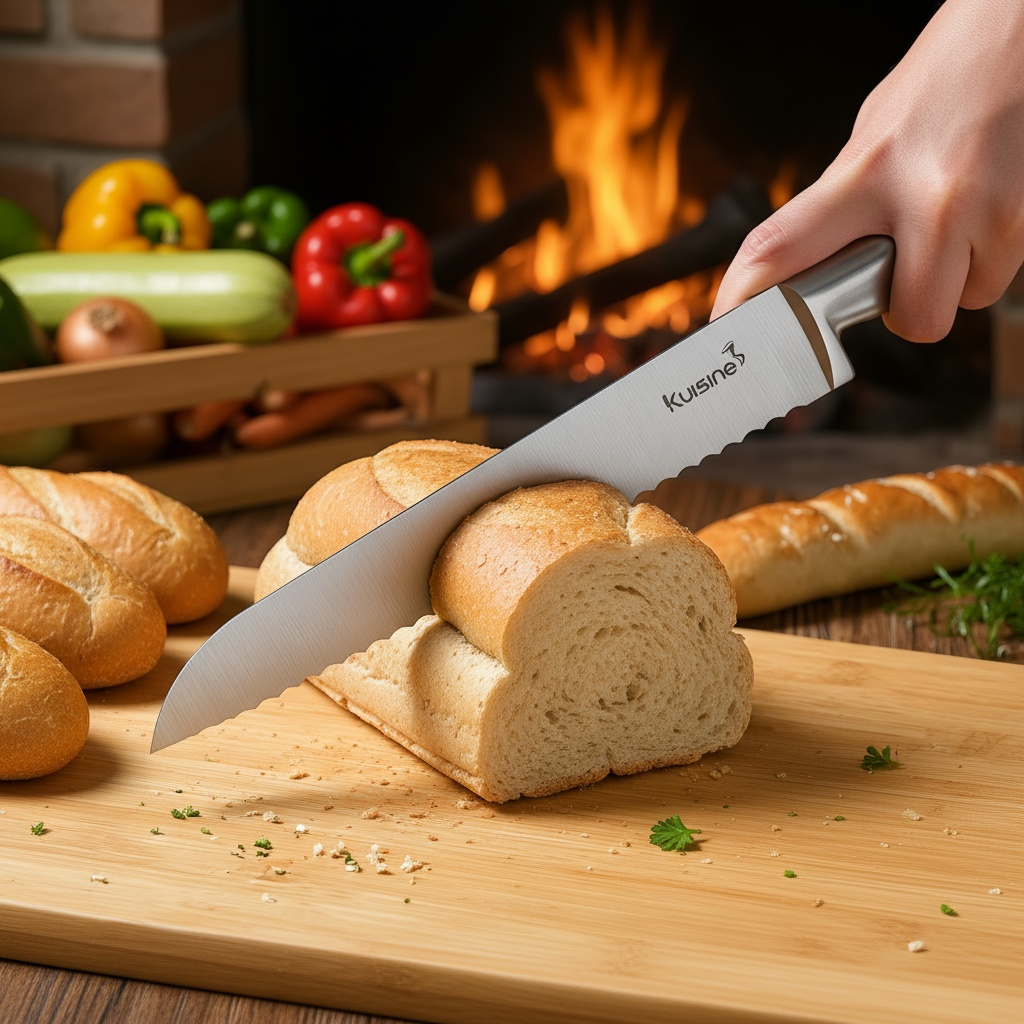
Safety and efficiency form the bedrock of any high-volume culinary environment. Whether in a bustling restaurant kitchen, a large-scale catering operation, or an upscale boutique bistro, the tools utilized by chefs dictate the precision, speed, and safety of the final output. Among these tools, the knife remains the most essential, yet often overlooked, component. An ergonomic handle knife has transitioned from a luxury item to a fundamental necessity for maintaining professional standards and worker well-being. By focusing on the structural design of the handle, kitchens can significantly reduce the risk of workplace injuries, minimize repetitive strain, and improve overall cutting consistency.
Understanding the Engineering Behind Ergonomic Handle Knives
When evaluating an ergonomic handle knife, the focus must shift beyond mere aesthetics to the biomechanics of the hand and wrist. A standard knife handle often forces the hand into a rigid, unnatural position. Conversely, an ergonomic design is sculpted to distribute pressure evenly across the palm, minimizing the tension placed on the flexor tendons. Specifically, these handles often feature contoured shapes, textured non-slip grips, and balanced bolsters that act as a fulcrum.
When a chef engages in repetitive cutting tasks, the force exerted is significant. A properly designed ergonomic handle knife redirects this force. For instance, a handle constructed from high-density, food-grade polymers or G10 composites provides a friction coefficient that remains stable even when wet or oily. This design choice prevents the handle from rotating in the hand, which is a leading cause of accidental slips. Technical analysis shows that a handle with a diameter ranging from 22mm to 28mm, combined with a tapered profile, accommodates the natural grip of a human hand, ensuring that force is applied directly through the spine of the blade rather than the soft tissues of the palm.
Minimizing Repetitive Strain and Enhancing Cutting Precision
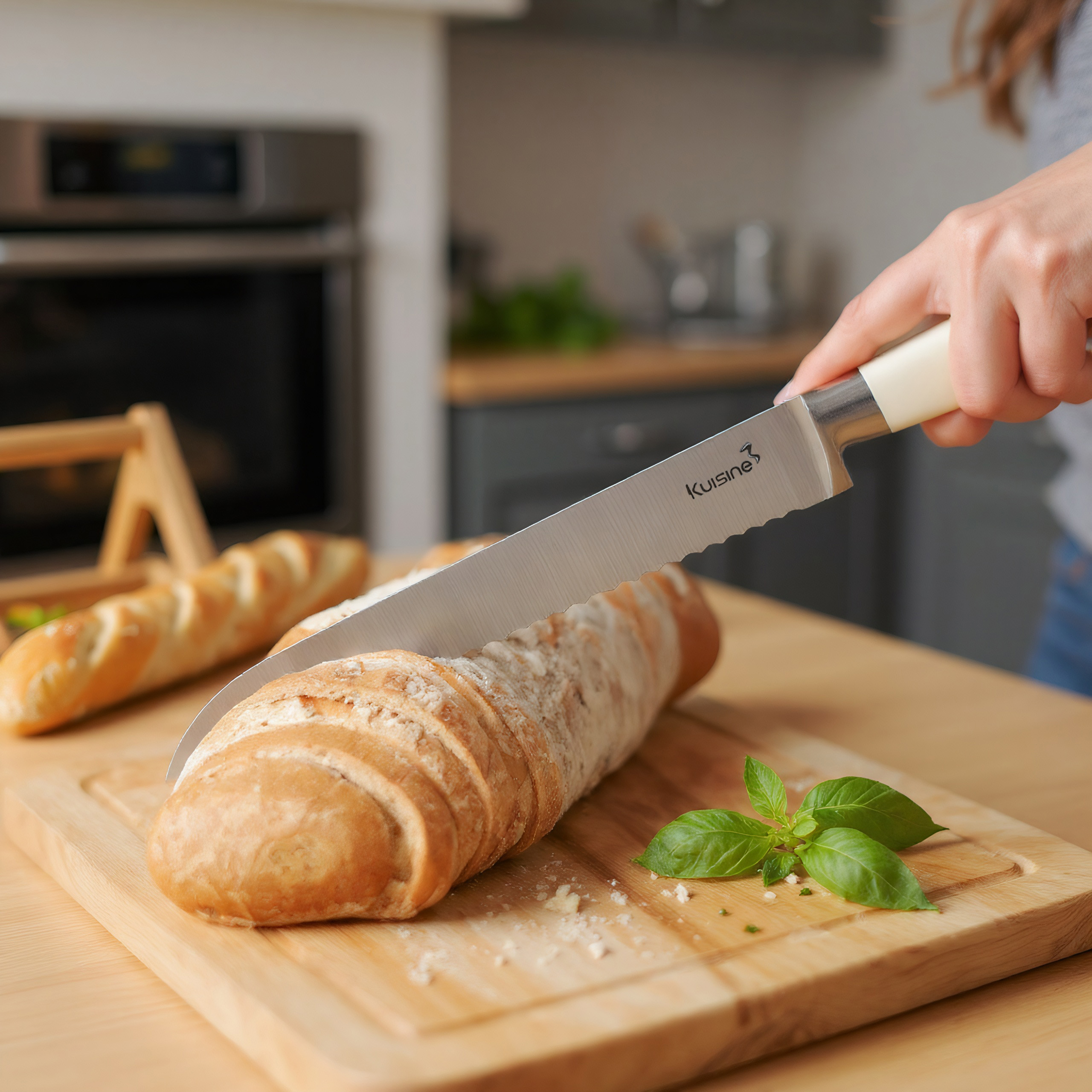
Long-term culinary work involves hours of repetitive motion, which frequently leads to musculoskeletal disorders. Carpal tunnel syndrome and tendonitis are pervasive risks for professional chefs. An ergonomic handle knife addresses these issues by neutralizing the grip angle. By maintaining a neutral wrist position, the strain on the median nerve is reduced by approximately 30% compared to traditional straight-handle designs.
Precision is equally vital. When the hand is fatigued, control over the blade diminishes. The inclusion of a strategic finger guard and a recessed choil on the handle allows the chef to adopt a "pinch grip" more securely. This technique is the gold standard for control, and a handle shaped to facilitate this grip transforms the knife into an extension of the arm. Furthermore, the balance point of these knives is precisely engineered to be located exactly at the junction where the handle meets the blade. This creates a fulcrum that makes the knife feel lighter, reducing the physical effort required to execute complex slicing or dicing maneuvers.
Real-World Impact: A Case Study in Performance
To understand the tangible benefits of an ergonomic handle knife, one must examine its application in high-pressure environments. A notable project occurred in a large-scale commercial food processing facility in Germany. This operation, responsible for the daily preparation of 5,000 artisanal sandwich units, faced significant challenges regarding prep speed and worker fatigue. The facility reported that their existing knife inventory caused mid-shift exhaustion, leading to inconsistent slice thickness and a 4% spoilage rate due to uneven processing.
The facility transitioned its entire preparation line to high-performance knives manufactured by KUISINE. These tools featured a specific ergonomic handle design characterized by a 15-degree curvature and an anti-fatigue textured grip. The role of this product was to serve as the primary interface between the staff and the high-speed slicing equipment.
The results were transformative. Within three months of implementation, the facility observed a 22% increase in total output per hour. More importantly, reported instances of hand fatigue dropped by 45%. The consistency of the cuts improved drastically, reducing product wastage from 4% to 0.8%. This success underscored how the integration of an ergonomic handle knife is not merely about comfort; it is a strategic business decision that optimizes throughput and reduces operational overhead.
Economic Value and Long-Term Reliability
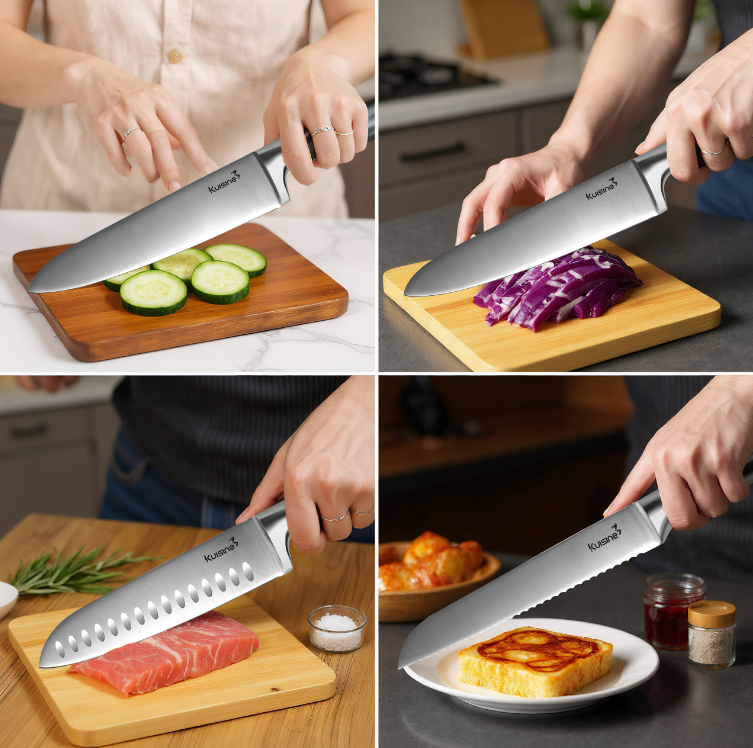
For distributors and contractors, the value of an ergonomic handle knife is found in its durability and the reduction of liability. Investing in high-quality handles means investing in materials that withstand the thermal shock of industrial dishwashers, which operate at temperatures exceeding 85°C. A lower-quality handle will degrade, crack, or lose its grip texture within a few hundred cycles, leading to increased replacement costs.
KUISINE provides manufacturing solutions that prioritize these material specifications. By utilizing advanced polymers that maintain structural integrity across a temperature range of -20°C to 120°C, the lifespan of the tool is significantly extended. From a procurement perspective, the cost-per-use of an ergonomic handle knife is substantially lower than that of cheaper, mass-produced alternatives. When a handle is designed to last for five years of daily, heavy-duty use rather than twelve months, the return on investment becomes clear. Furthermore, the reduction in insurance premiums associated with workplace safety claims provides an additional, often overlooked, financial benefit to professional kitchens.
Adapting to Global Culinary Standards
The global culinary landscape is diverse, yet the fundamental need for efficient tools is universal. Whether a kitchen focuses on traditional French techniques or high-speed, modern fusion cuisine, the mechanical advantages offered by an ergonomic handle knife remain constant. Culturally, there is a growing shift towards prioritize staff retention and ergonomics as part of a healthy work culture. Establishments that provide top-tier tools communicate a commitment to their workforce, which in turn boosts morale and professional output.
KUISINE recognizes that supply chain reliability is just as important as the design itself. By maintaining strict quality control protocols—ensuring that every handle batch meets specific weight tolerances of within 2 grams—there is a guarantee of consistency that global distributors can rely upon. In an industry where reliability defines reputation, aligning with partners who understand the precise manufacturing requirements of a modern ergonomic handle knife is the primary step toward culinary excellence.
Table of Contents
- The Critical Importance of Ergonomic Handle Design in Professional Kitchens
- Understanding the Engineering Behind Ergonomic Handle Knives
- Minimizing Repetitive Strain and Enhancing Cutting Precision
- Real-World Impact: A Case Study in Performance
- Economic Value and Long-Term Reliability
- Adapting to Global Culinary Standards