
 EN
EN
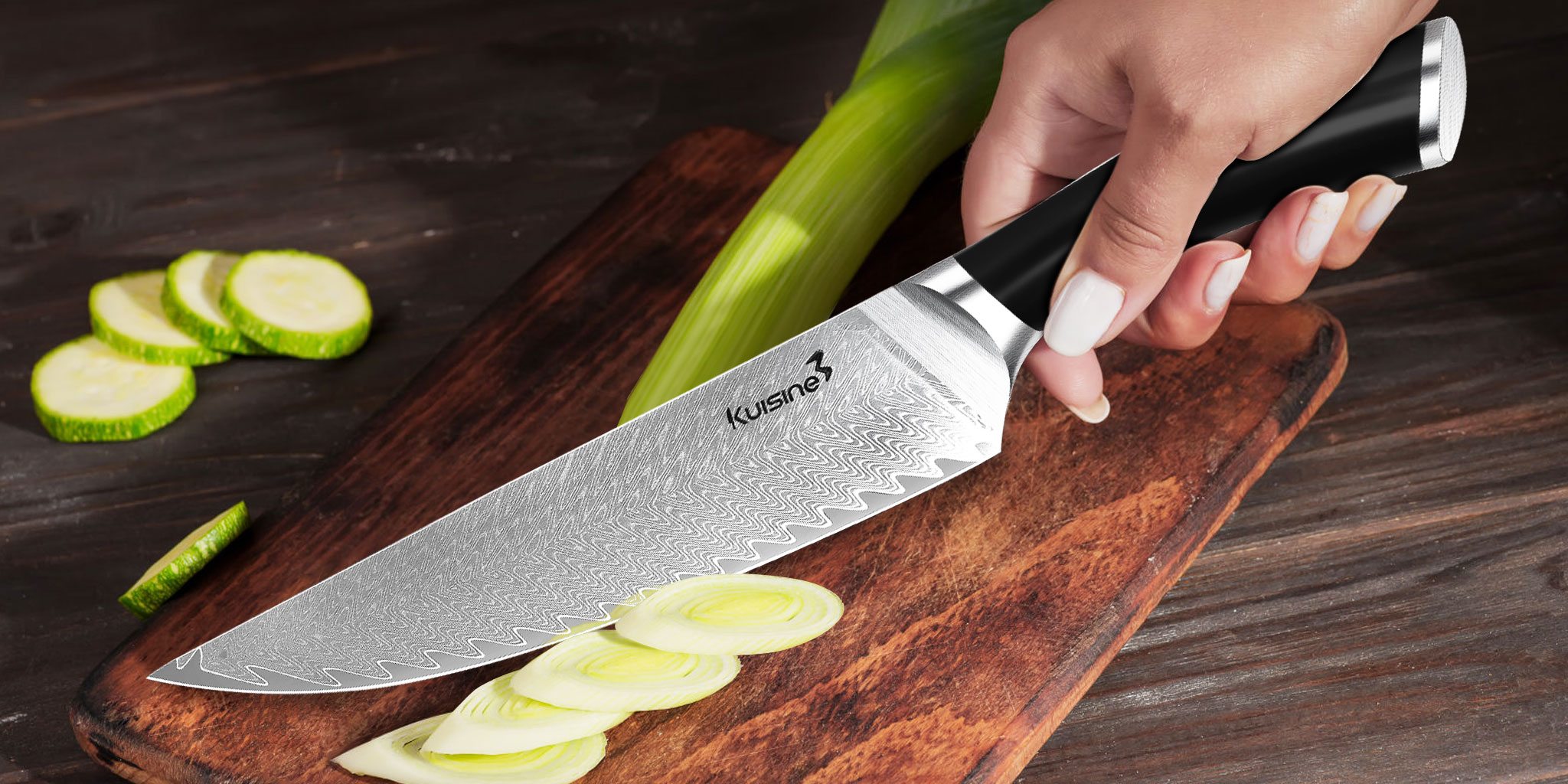
Choosing the right knife set for a high-traffic commercial kitchen or a sophisticated home culinary space is not just about aesthetics; it is about performance, safety, and operational longevity. For contractors, developers, and distributors, the goal is to identify tools that minimize downtime and maximize precision. A superior knife set is defined by its ability to maintain a sharp edge under stress while resisting corrosion and mechanical failure. In the following sections, we will break down the engineering and procurement standards required to source professional-grade cutlery that stands the test of time.
Understanding blade geometry and material science
The foundation of a high-performance knife lies in its metallurgical composition. High-carbon stainless steel is the industry standard for a reason. Unlike standard stainless steel, which may prioritize stain resistance over edge retention, high-carbon variants offer a hardness rating between 56 and 58 on the Rockwell C scale. This specific hardness range ensures that the blade is hard enough to hold a razor-sharp edge for extended periods but ductile enough to avoid shattering when encountering dense materials like root vegetables or poultry joints.
Blade geometry further dictates the efficiency of the cut. A primary bevel angle of 15 to 17 degrees per side is optimal for a balance between sharpness and structural integrity. If the angle is too steep, the edge will fold or roll under daily pressure; if it is too shallow, the edge becomes fragile. KUISINE implements a precise laser-guided grinding process to ensure consistency across the entire blade length, reducing the frequency of necessary honing by approximately 40% compared to standard factory-sharpened knives. This level of precision is what separates high-end culinary tools from consumer-grade alternatives.
The critical role of construction and balance
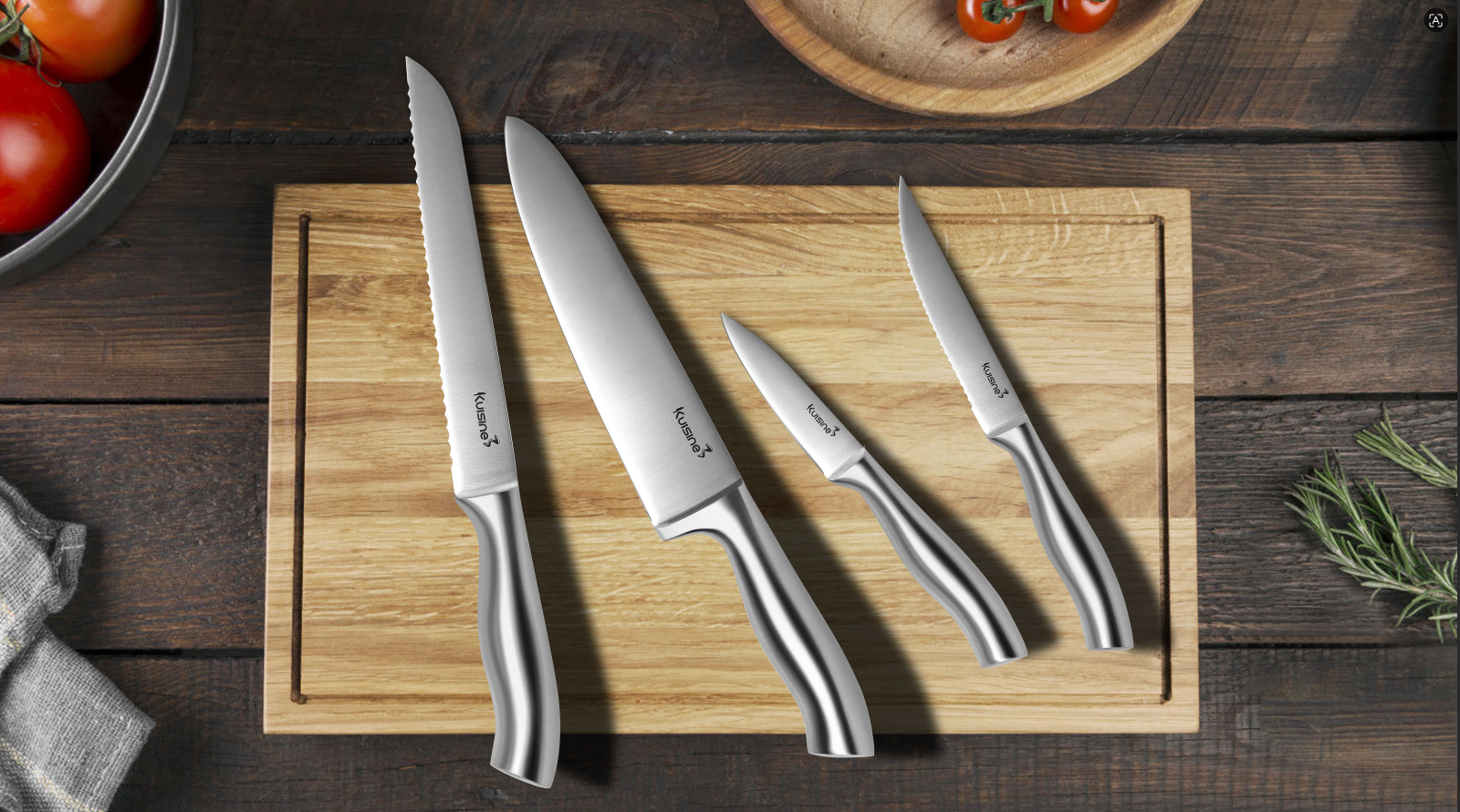
A sturdy knife is defined by its tang—the portion of the blade that extends into the handle. For heavy-duty use, a full-tang construction is mandatory. This design allows the blade to act as a single unit, distributing weight evenly from the tip to the heel. When a chef handles a knife with a balanced center of gravity, the physical effort required to execute repetitive chopping tasks decreases significantly, reducing muscle fatigue over long shifts.
Furthermore, the handle material must withstand rigorous sanitization protocols. High-density polymers or stabilized wood composites are preferred because they do not absorb moisture or harbor bacteria. A handle secured with triple-riveted construction ensures that the blade remains fixed even after thousands of dishwasher cycles or high-pressure cleaning, providing a secure grip that maintains its structural profile without warping or loosening. Investing in these structural features early prevents the common issue of handle separation, which is the leading cause of premature tool disposal in commercial settings.
Real-world performance: The culinary hub project in Sydney
The practical application of these technical standards is best illustrated by a major procurement project for a luxury apartment development in Sydney, Australia. The project required a premium, durable cutlery solution for 200 high-end residential units designed for long-term rental, where maintenance costs needed to be kept at a minimum to satisfy the property investment group.
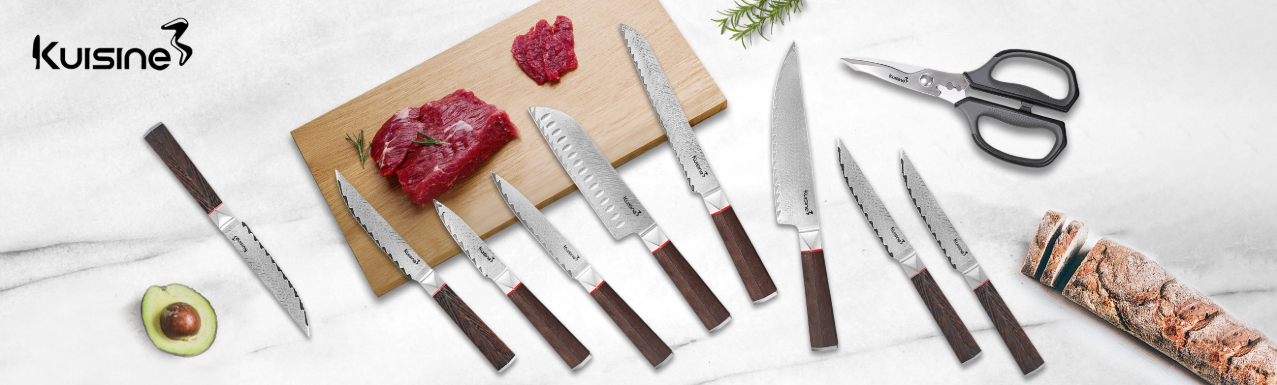
KUISINE was selected to supply the kitchen equipment based on the requirement for consistent performance and low replacement rates. During this project, KUISINE provided a specialized 8-piece set featuring high-carbon steel blades with a reinforced bolster. Before implementation, the onsite management team reported that previous knife sets required professional sharpening every two months. After switching to the KUISINE solution, the interval between professional sharpening extended to five months.
By integrating a specific heat-treatment process that stabilizes the molecular structure of the steel, these knives maintained a sharpness retention index 30% higher than the previous models used in the development. The impact was twofold: the property management firm significantly reduced their annual cutlery replacement budget by approximately 25% over the first year, and the residents experienced a noticeably smoother culinary experience. This case demonstrates that selecting the right material and construction is a strategic investment that yields tangible operational savings and long-term asset value.
Evaluating technical specifications for procurement
When reviewing technical sheets for large-scale procurement, look for specific numerical data rather than qualitative adjectives. A reliable knife set should clearly state the steel grade—such as X50CrMoV15, which indicates the precise presence of chromium, molybdenum, and vanadium. These elements are essential for rust prevention, edge durability, and ease of sharpening.
The weight distribution is another quantifiable factor that often goes overlooked. For a standard 8-inch chef’s knife, a weight between 200 and 240 grams is generally considered the "sweet spot" for professional utility. Knives lighter than this often feel flimsy and require more force from the user, while heavier knives can cause premature wrist strain. Distributors should verify these specifications against the manufacturer's data sheets to ensure the equipment meets the specific ergonomic needs of the target end-user. Ensuring the balance point is located exactly at the bolster junction is also a hallmark of a well-engineered tool, providing the control necessary for precision tasks like dicing herbs or thinly slicing proteins.
Maximizing the lifecycle of the knife set
Even the highest-quality knife requires proper maintenance to ensure it remains sharp and sturdy. Educating end-users on the limitations of their tools is vital for longevity. Even with a high-carbon alloy, knives should never be stored loosely in a drawer. Using magnetic wall strips or dedicated wooden blocks prevents microscopic edge damage caused by clashing against other metal implements.
Furthermore, the use of appropriate cutting surfaces is non-negotiable. Glass, ceramic, and marble surfaces act like grinding wheels, causing immediate damage to the fine edge of a sharp blade. High-density polyethylene or end-grain wooden boards are the only surfaces that preserve the 15-degree edge geometry. By pairing the right hardware with the correct maintenance practices, the utility of the knife set is extended, ensuring that the initial capital expenditure provides maximum return over a lifespan that can exceed a decade. Developers and distributors who advocate for these best practices add significant value to their clients, fostering trust and long-term brand loyalty. When users understand that a knife is an investment rather than a disposable commodity, they tend to treat the equipment with greater care, further extending the product's functional life.